
Criminal Cases in the Wisconsin Courts
Wisconsin Circuit Courts are the state's trial courts. They have original jurisdiction over felony and misdemeanor prosecutions. One unified circuit system serves all 72 counties, though larger counties have more branches. A district attorney files the criminal complaint in the county of prosecution. The clerk of circuit court then maintains the official Wisconsin case file. Consolidated Court Automation Programs, known as CCAP, supports the electronic court record and publishes eligible docket information through Wisconsin Circuit Court Access.
Municipal courts sit on a different track. They decide local ordinance violations and impose forfeitures, not criminal sentences. Conduct punishable only by a forfeiture is not a crime under Wisconsin law. A municipal citation may resemble a criminal matter, yet it may never appear as a circuit criminal case in WCCA. Check the court and case number printed on the citation before choosing a search channel.
The Wisconsin circuit courts overview shows the statewide trial-court structure.
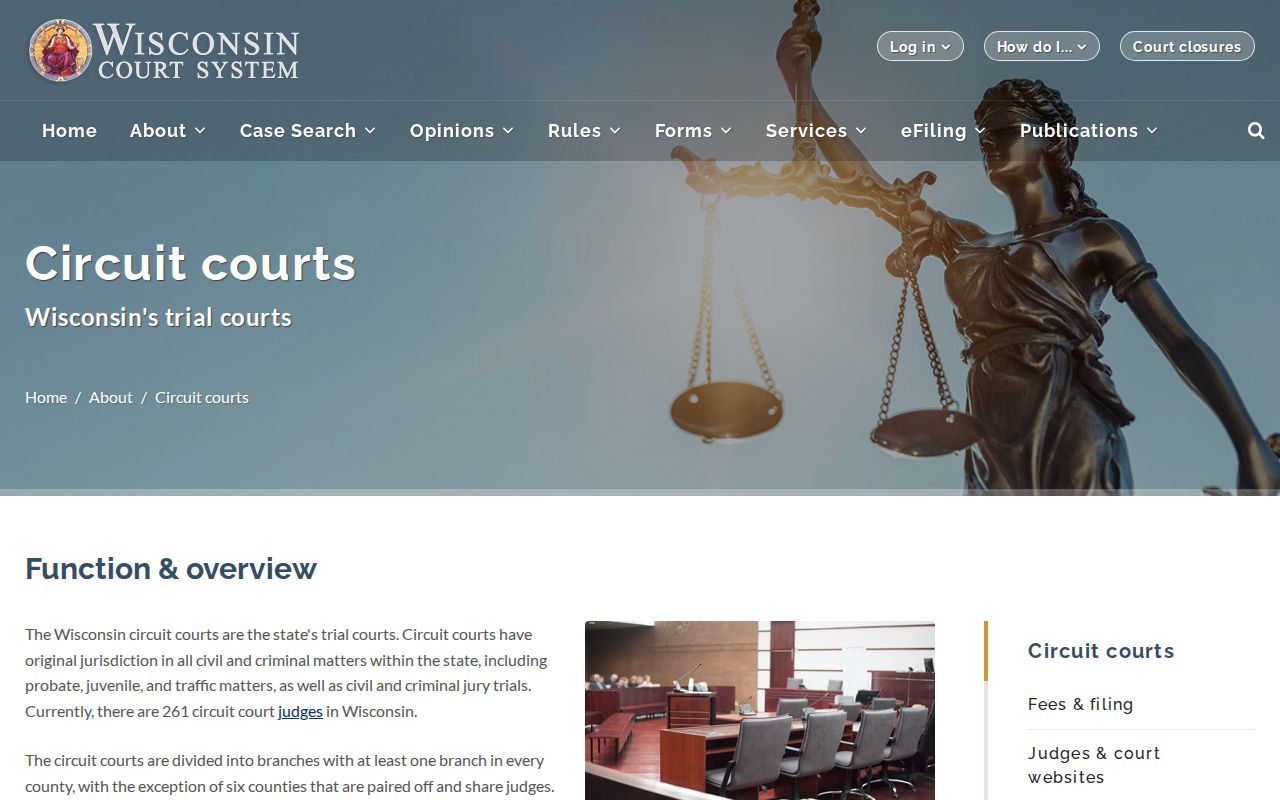
That court map explains why a Wisconsin criminal case has both a statewide index and a county custodian.
Wisconsin Court Levels Compared
A circuit court conducts the trial and enters the judgment. The Wisconsin Court of Appeals reviews circuit decisions rather than retrying the facts. It has 16 judges in four districts. The Wisconsin Supreme Court is the highest state court and usually chooses which appeals to review. Circuit dockets use WCCA. Appellate dockets use the separate Wisconsin Supreme Court and Court of Appeals Case Access system, or WSCCA.
| Wisconsin court | Main role | Public record channel |
|---|---|---|
| Circuit Court | Tries felony and misdemeanor cases | WCCA plus the county clerk |
| Municipal Court | Decides local ordinance violations | The individual municipal court |
| Court of Appeals | Reviews circuit decisions | WSCCA and the appellate clerk |
| Supreme Court | Highest state appellate authority | WSCCA and the Supreme Court clerk |
The municipal court overview illustrates the local ordinance layer.
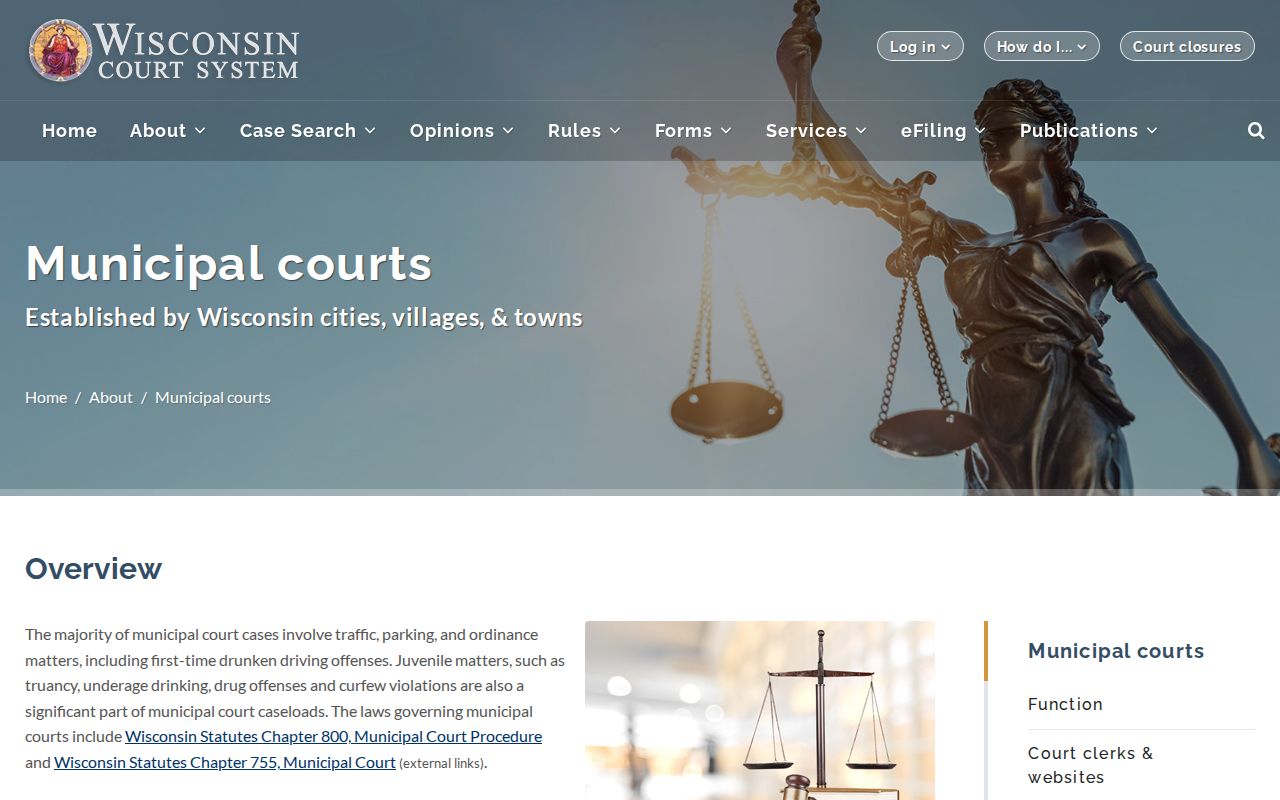
This distinction prevents a forfeiture case from being mislabeled as a Wisconsin criminal conviction.
How to Search Wisconsin Circuit Court Access
Wisconsin Circuit Court Access is free and covers eligible public circuit cases statewide. Accept its terms, then search by case number when one is known. A name search can be broad. Add date of birth and county to distinguish people with similar names. WCCA is a convenience copy, so confirm unclear results with the clerk.
- Open WCCA and accept the public-access terms.
- Enter the exact case number, or search a name with date of birth.
- Choose statewide coverage first, then narrow to the filing county and criminal case type.
- Read each charge, plea, disposition, judgment, sentence, and recent docket event.
- Ask the filing county's clerk for documents, archives, or a certified copy.
| Field Label | Type | Required | Notes |
|---|---|---|---|
| First, middle, last name | Text | No | Options can include cases missing middle names |
| Date of birth | Date | No | Useful for separating similar names |
| County | Dropdown | No | Search statewide or select one county |
| Case number | Text | No | Most precise route when known |
| Case type and status | Advanced controls | No | Filter criminal type and open, closed, filed, or reopened status |
| Filing, disposition, offense dates | Date ranges | No | Some date searches use short windows |
The Wisconsin case-search gateway separates circuit and appellate searches.
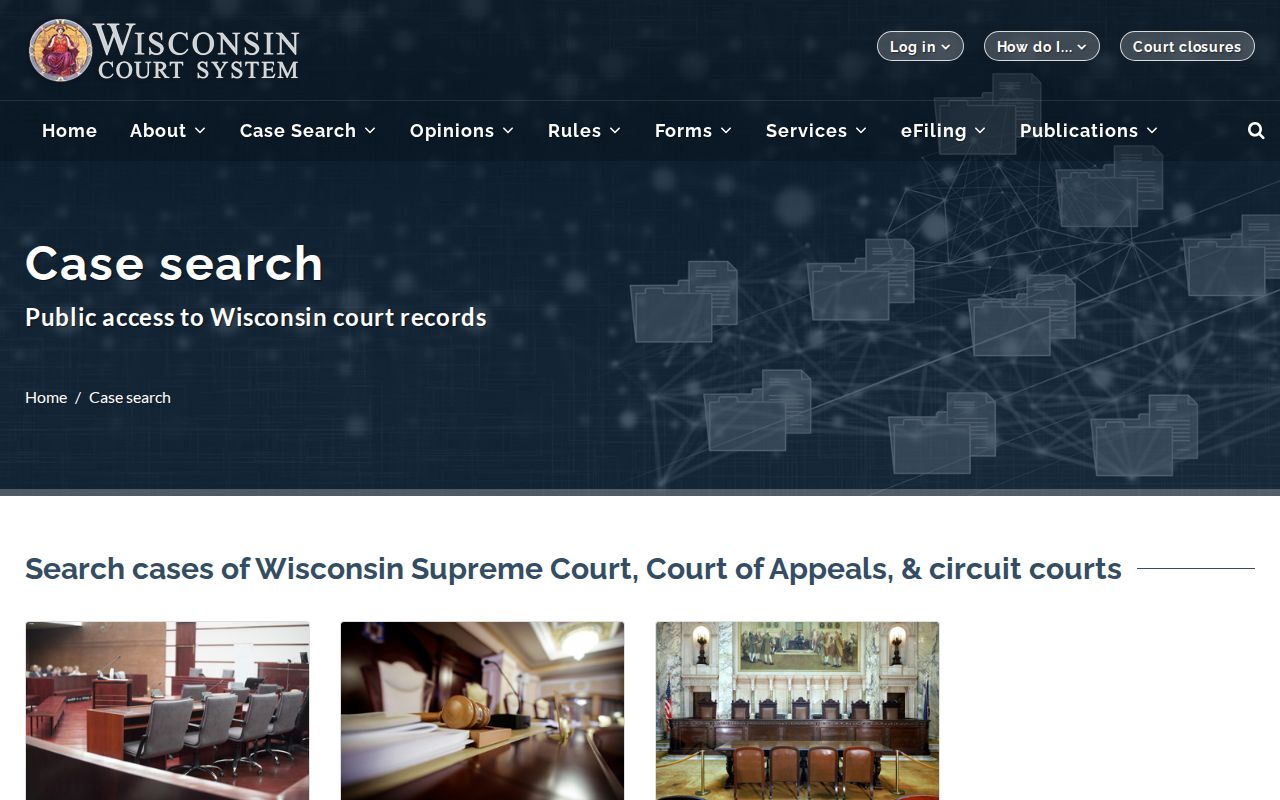
Using the correct gateway avoids searching WCCA for an appeal that exists only in WSCCA.
Wisconsin Case Dockets Decoded
A Wisconsin circuit case number links one proceeding, not one person's full history. Common criminal type codes include CF for felony, CM for misdemeanor, and CT for criminal traffic. The charge table may show a statute, short description, severity, modifiers, plea, and disposition. Read the whole row. A dismissed count can remain visible as part of the case history even though it did not produce a conviction.
- Disposition
- The formal outcome of a charge, such as conviction, dismissal, or acquittal.
- Initial appearance
- The first hearing that addresses the charge, rights, counsel, and release.
- Preliminary examination
- A felony hearing that tests probable cause unless it is waived.
- Deferred prosecution agreement
- An agreement that can delay prosecution and lead to dismissal after successful completion.
- Extended supervision
- The community portion of a Wisconsin bifurcated sentence after confinement.
The WCCA search interface displays the live fields and terms.
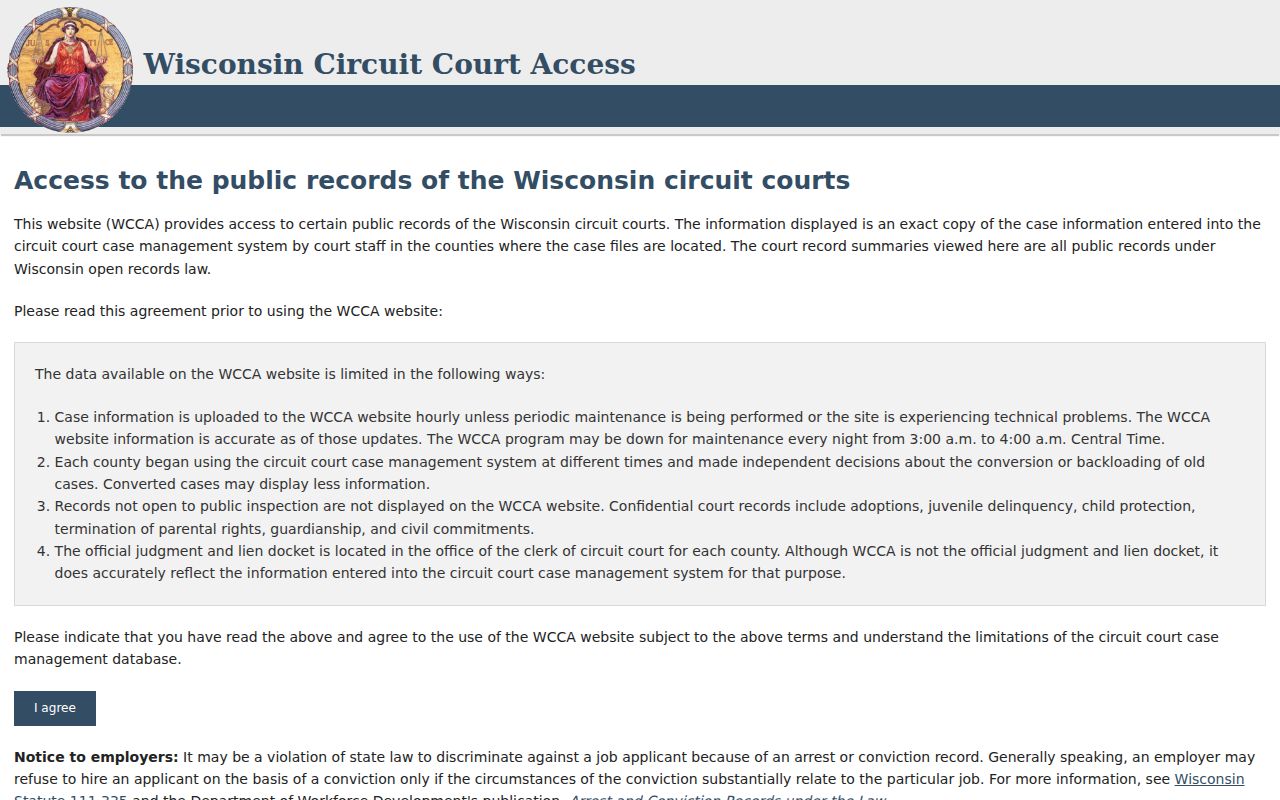
The statewide docket is strongest when each code is tied back to its charge and final outcome.
What the Case File Shows
The official Wisconsin case file can contain far more than the public summary. Complaints state the allegations and claimed facts. Motions and orders track contested issues. Minute sheets and docket entries record court activity. The judgment controls the formal result. Transcripts, exhibits, presentence material, sealed filings, and protected details can follow separate access rules.
| Case Number & Court | Identifies the county, case type, filing year, sequence, and assigned circuit court. |
|---|---|
| Charging Documents | The complaint and information state filed accusations; later amendments may change them. |
| Docket Entries | Chronological filings, hearings, warrants, orders, and clerical events. |
| Hearing Dates | Scheduled and completed appearances, with the responsible official where public. |
| Disposition | The result for each count, not merely the overall case status. |
| Sentence & Judgment | Confinement, supervision, credit, restitution, costs, conditions, and sentence structure. |
A printed WCCA screen is not a certified copy. Current statewide guidance lists ordinary circuit copies at $1.25 per page plus $5 for certification. Ask the county clerk about inspection, electronic delivery, redaction, and the current charge before ordering.
Missing Wisconsin Court Cases
A blank Wisconsin search result has several possible causes. WCCA excludes confidential, sealed, juvenile, and expunged matters. Older coverage varies by county conversion and retention history. Under the court's display policy, a criminal case that ends in dismissal or acquittal is generally removed from WCCA two years after disposition. The underlying clerk record may still exist if no other restriction applies.
Check spelling, aliases, date of birth, county, and case-number format. Then contact the likely clerk. Ask whether the record is archived, available only at a courthouse terminal, or subject to a display limit. Wisconsin Public Records Law does not compel a clerk to create a new analysis, and protected identifiers remain redacted. A missing online entry does not prove that no case ever existed.
A focused Wisconsin records request should identify the case number, filing county, document name, and date range. Ask to inspect an existing Wisconsin court record or obtain a copy rather than asking the custodian to answer a legal question. The clerk may separate public pages from sealed, confidential, or protected material. If a request is denied or redacted, the reason should rest on a statute, court rule, order, or the applicable Wisconsin public-interest analysis. This process is distinct from WCCA's online display policy.
Stages of a Wisconsin Criminal Case
A Wisconsin criminal record changes as the case moves. An arrest and booking may precede a filed complaint. The initial appearance addresses rights, counsel, and release. A felony case may include a preliminary examination before information and arraignment. Motions, plea talks, and trial preparation add docket events. A plea or verdict resolves each charge, followed by judgment and sentencing when there is a conviction.
Case flow: Charges Filed › Arraignment › Pretrial › Plea or Trial › Disposition › Sentencing
The arrest allegation, prosecutor's filed charge, and final judgment can differ. Wisconsin circuit courts also run county-specific problem-solving programs, including treatment, drug, OWI, veterans, and mental-health dockets. Their availability and eligibility are local. The docket and final order show what happened in the individual case.
Wisconsin Court Records and CIB
WCCA is case-centered. The Wisconsin DOJ Crime Information Bureau response is person- and fingerprint-cycle-centered. WCCA can show a filed case even when an arrest did not link as expected in CIB. A CIB response can retain a fingerprint-supported arrest cycle that no longer appears on WCCA. Neither source replaces the other.
County courts send disposition and sentence information through CCAP to CIB. A delay or failed match can leave an arrest without its outcome. Compare identifiers, charges, county, case number, and disposition. If the CIB record is factually wrong, use the official challenge process with court or agency documents. A court-file question still goes to the clerk. More detail about the compiled repository file appears in the Wisconsin DOJ / CIB record review.
The Wisconsin Court of Appeals overview shows how review moves above the circuit court.
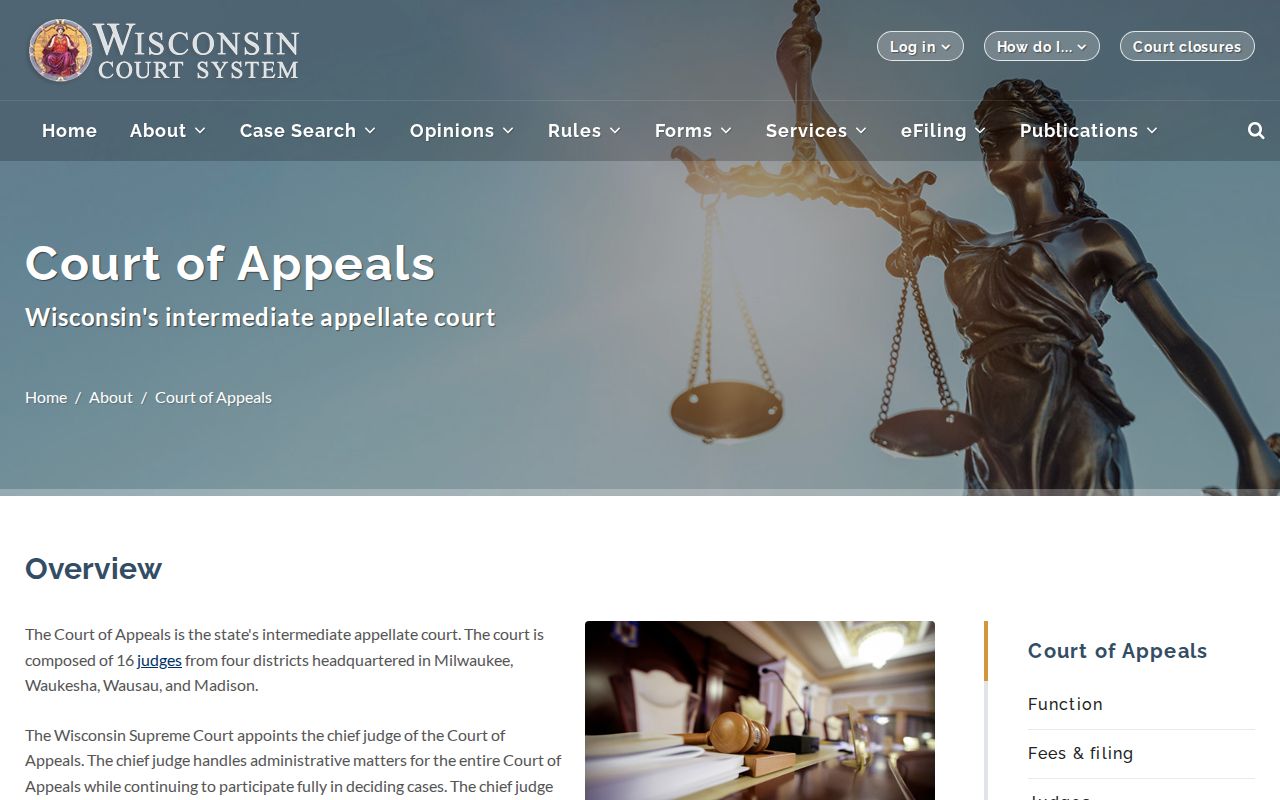
An appeal can affirm, reverse, remand, or change the circuit result, so the appellate record can be essential.
Wisconsin Appeals Use WSCCA
When a circuit docket shows an appeal, move to WSCCA. That separate public system covers the Wisconsin Court of Appeals and Supreme Court. Search by appellate case number, party, or available case fields. Then connect the appellate docket to the circuit case. The higher court reviews claimed legal error and does not conduct a new criminal trial.
The Wisconsin Supreme Court overview identifies the state's highest court.
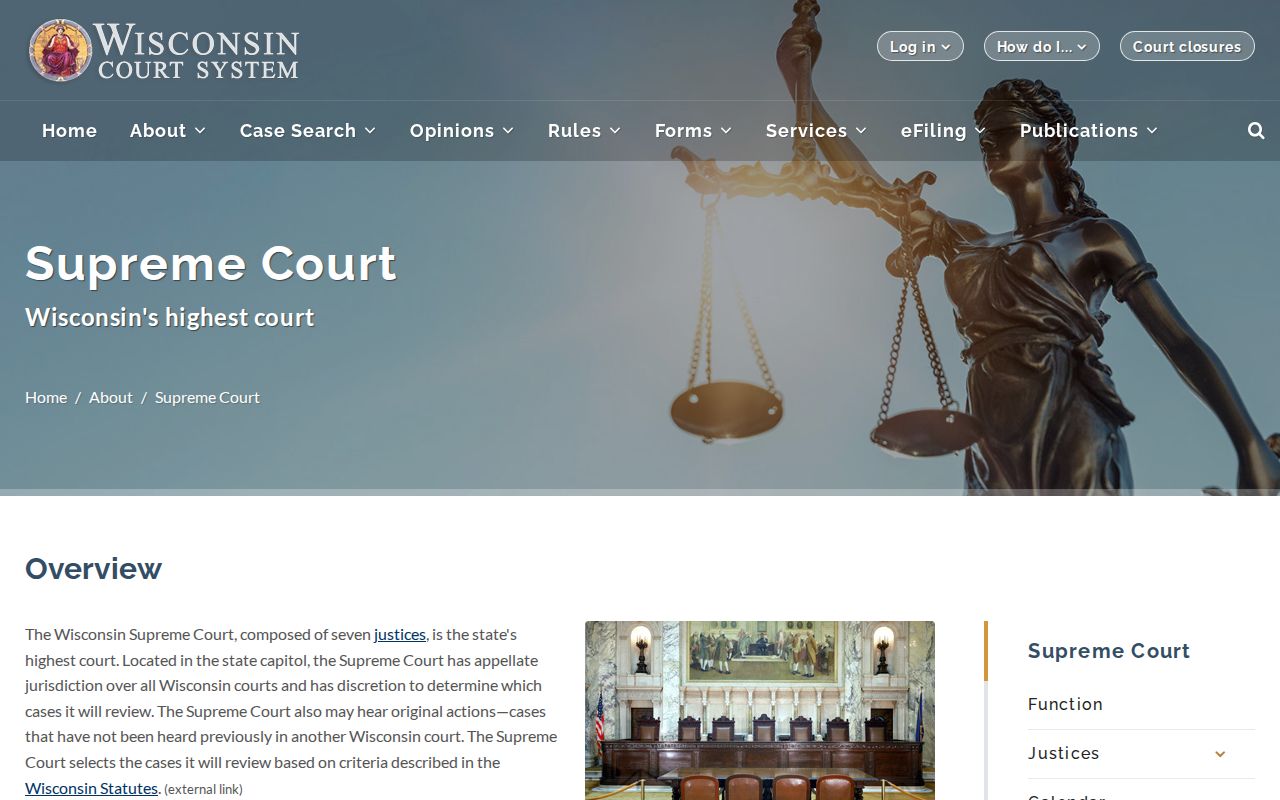
This appellate layer completes the public Wisconsin court trail when a circuit judgment is reviewed.
Finding Case Records by County
The clerk of circuit court in the filing county holds the official criminal case. Contact that clerk for the complaint, motions, non-imaged orders, judgment, transcripts, certification, and archives. Police reports remain with the creating agency. Booking records remain with the sheriff or jail. Prosecution material may remain with the district attorney. WCCA does not merge those files.
Start with the county displayed in WCCA. If the arrest occurred elsewhere, both counties may hold useful records. Browse the full directory of all 72 Wisconsin counties to reach the right local criminal-records route. For Wisconsin criminal court cases, the county file controls when the statewide convenience copy is incomplete.
For a complete Wisconsin case trail, note the source and access date for each record. Keep the WCCA case number with any clerk copy, CIB response, police report, or appellate docket. That simple cross-reference preserves which Wisconsin agency made each statement and prevents an allegation in one file from being mistaken for the court's final finding.