
How to Check Criminal History in Wisconsin
A thorough Wisconsin criminal history search starts by choosing the record layer that answers the question. The Wisconsin Online Record Check System, or WORCS, returns a name-based response from the Wisconsin Department of Justice Crime Information Bureau. Wisconsin Circuit Court Access, known as WCCA, shows eligible public circuit-court dockets. The DOC Offender Locator covers qualifying state custody and supervision records. County clerks, sheriffs, jails, and police departments hold the original local files. None of these sources replaces all the others.
Gather a full name, exact date of birth, known aliases, and any case, booking, or agency number before searching. Then compare identifiers and dates across the results. A name match alone is not positive identification. Follow the record to the county that created it when a statewide result is absent, incomplete, or unclear.
- Start with WORCS for a Wisconsin CIB name-based criminal history response.
- Search WCCA by case number or by name and date of birth for public circuit-court dockets.
- Use the county route for arrest reports, jail bookings, complaints, judgments, and certified court copies.
- Read each source by event date and match several descriptors before deciding that records concern the same person.
- Use the proper fingerprint or certified channel when a personal review or authorized process calls for it.
Note: A saved result is a snapshot, so record the access date and verify later changes with the office that owns the source file.
WORCS Fields for Wisconsin History
WORCS is the public ordering channel for a Wisconsin CIB response. An account is optional. A guest accepts the security notice, submits requester and subject details, pays through the portal, and keeps the Order Reference Number. That number is essential for later retrieval. Results remain available for six months, and reopening a stored result during that time does not trigger a new search fee. The response is current only as of its search timestamp.
The $7 General search is name-based. Required subject details include last and first name, gender, race, and date of birth. An alias may be added. A Social Security number is optional. A WiUPIN, when CIB issued one after a false-match challenge, helps distinguish similarly named people. Certification adds $5 and changes how the signed or notarized result is returned.
| WORCS Field | Required | Why It Matters |
|---|---|---|
| First and last name | Yes | Starts the name-based match. |
| Date of birth | Yes | Separates many same-name results. |
| Gender and race | Yes | Supplies added indexed descriptors. |
| Alias | No | Checks a known former or alternate name. |
| WiUPIN | If issued | Helps prevent a repeat false match. |
The Wisconsin Criminal History Repository
The Wisconsin Department of Justice, Division of Law Enforcement Services, Crime Information Bureau maintains the Centralized Criminal History database. CIB receives qualifying fingerprint-supported arrest events, prosecutor information, court outcomes, sentence data, and some corrections events. Its restricted TIME network serves authorized justice agencies. TIME is not a public criminal record or warrant search. Public adult name checks run through WORCS.
A Wisconsin rap sheet is person- and arrest-cycle-centered. It can show the master name used on the first fingerprint submission, aliases, physical descriptors, arrest allegations, prosecutor action, court disposition, and corrections events. The record may include a Wisconsin SID, an FBI or Universal Control Number, and a fingerprint Transaction Control Number. Those identifiers serve different purposes. They should not be treated as interchangeable case numbers.
A name-based response may belong to a person with similar details. Wisconsin DOJ tells readers to compare the whole identification block and every event. The Wisconsin DOJ / CIB criminal history profile covers products, fees, ordering routes, and corrections in depth.
Wisconsin Records Reach CIB
Wisconsin criminal record data begins with local action. A police department, sheriff, tribal agency, State Patrol unit, campus department, or other authorized agency makes an arrest and creates its report. A booking facility records intake and captures fingerprints. For the events listed by state law, fingerprints and identifying details must be sent to DOJ within 24 hours after capture, with the statutory weekend or holiday extension.
The next steps belong to other custodians. A district attorney decides whether and what to charge. The county clerk and CCAP create the court case. After a dismissal, conviction, acquittal, sentence, or other outcome, the court system transmits disposition data to CIB. A state sentence also creates DOC records.
Arrest → Booking and fingerprints → CIB arrest cycle → County prosecution → Circuit-court disposition → Repository update
That chain can break. An arrest without supporting fingerprints does not enter CCH. A later disposition may fail to link to the right cycle. Wisconsin reported in a national 2022 repository survey that 10 percent of received dispositions could not initially link to an arrest event and entered problem resolution. This is one reason source checks matter.
Statewide Record Systems in Wisconsin
Wisconsin uses distinct statewide systems for criminal history, court dockets, state custody, and registration. Each portal has its own legal purpose and display rules. WCCA is case-centered. CIB is identity- and arrest-cycle-centered. DOC records custody and supervision. The registry publishes the subset of sex-offender information authorized by state law. Local files remain with the county or agency that made them.
The Wisconsin court system describes CCAP and WCCA as parts of its statewide court technology.
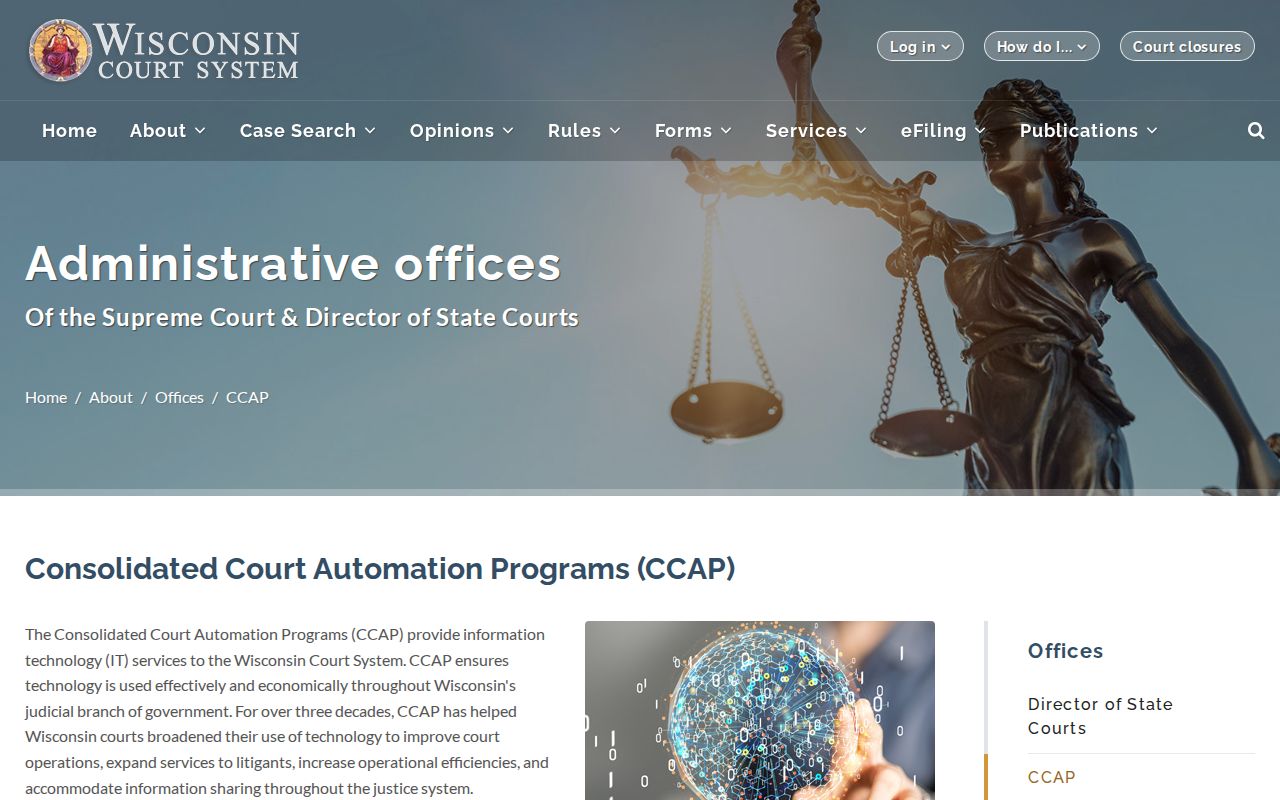
WCCA offers broad docket access, but the clerk in the filing county remains custodian of the official case file.
| System | What It Holds | Run By |
|---|---|---|
| WORCS | Name-based Wisconsin CIB history responses | Wisconsin DOJ / CIB |
| WCCA | Eligible public circuit-court docket data | Wisconsin Court System / CCAP |
| DOC Offender Locator | Qualifying state custody and supervision data | Wisconsin DOC |
| Sex Offender Registry | Public registry entries authorized by law | Wisconsin DOC |
Wisconsin Custody Records Split
County jail records and Wisconsin DOC records answer different questions. Jails generally hold people awaiting trial, serving shorter local sentences, held on supervision matters, or awaiting transfer. A sheriff or county government runs the jail and owns its roster and booking file. Wisconsin DOC operates state prisons and correctional centers for sentenced adults and supervises probation, parole, and extended supervision through its Division of Community Corrections.
The Wisconsin Department of Corrections provides the official entry to state custody, supervision, facility, and data resources.
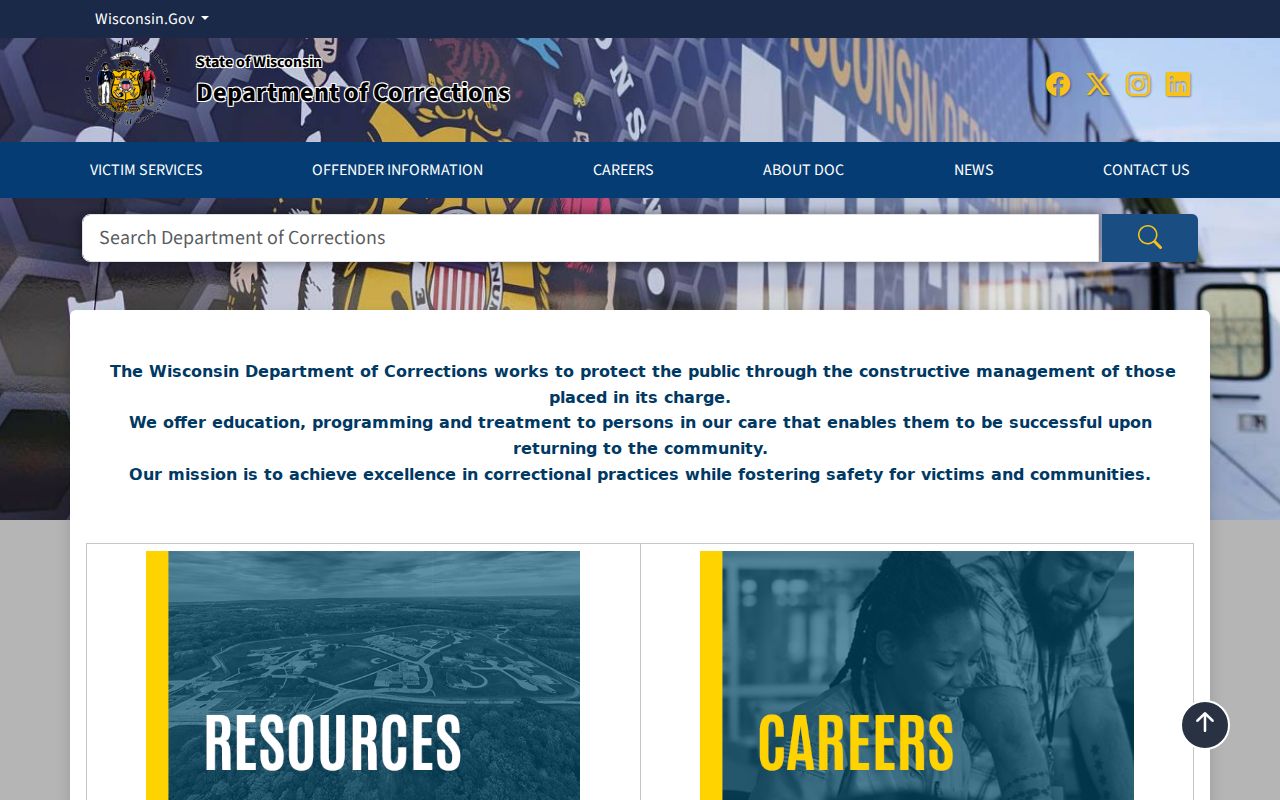
The public DOC Offender Locator is not a complete county jail roster, juvenile database, or criminal history report.
Wisconsin DOC Record Numbers
DOC identifies 36 adult institutions and centers. Its October 3, 2025 weekly report counted 23,478 adults in the total population against design capacity of 17,677. These figures are a dated operational snapshot. The Office of Detention Facilities separately inspects local detention sites, but that oversight does not make DOC custodian of every jail roster.
Current prison and supervision figures come from the Wisconsin DOC data and reports collection.
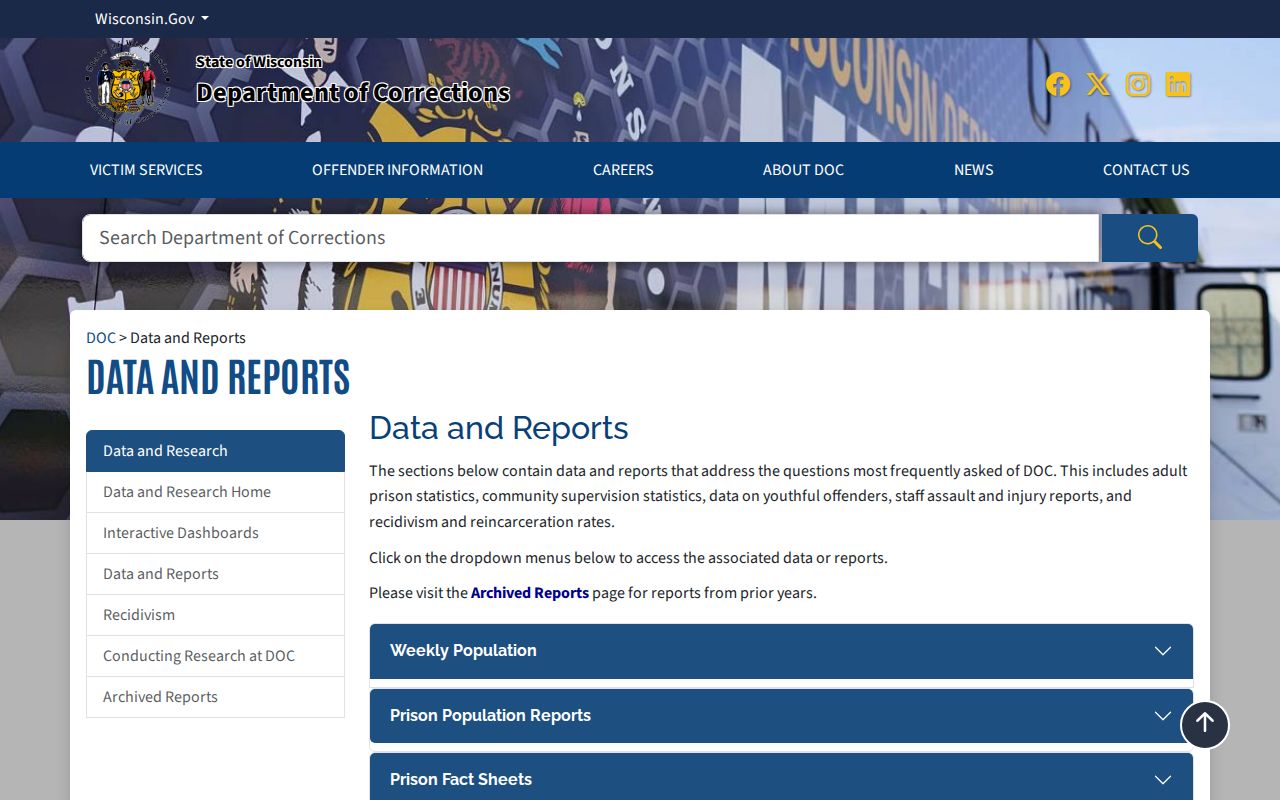
Date labels and counting methods must stay with any figure taken from those reports.
Types of Criminal Records
A Wisconsin criminal record is not one file. The record type reveals both who created it and where a reader must go for the official version. Early allegations should remain separate from later outcomes, and present custody should remain separate from guilt or sentence.
- Arrest and booking records: The arresting agency and jail hold the incident, intake, bond, custody, and release details.
- Criminal court case files: The circuit clerk keeps complaints, orders, judgments, and certified copies, while WCCA displays selected docket data.
- Repository rap sheets: CIB compiles fingerprint-supported arrest cycles and matched outcome data under state identifiers.
- Warrants: Courts issue them, agencies execute them, and public confirmation often requires a county-level check.
- Corrections and registry records: Wisconsin DOC keeps separate custody, supervision, and sex-offender registration systems.
- Disposition
- The formal outcome of a charge or case.
- Rap sheet
- An identity-based compilation of fingerprint-supported arrests and reported outcomes.
- Extended supervision
- The community portion of a Wisconsin bifurcated sentence after confinement.
- Expungement
- A narrow restriction of a qualifying circuit-court record under Wis. Stat. § 973.015.
Labels matter. An arrest allegation is not a conviction, a warrant is not a sentence, and a current roster entry is not a full Wisconsin criminal history.
Wisconsin Warrant Record Chain
Wisconsin has no single public portal that reliably searches every circuit, municipal, sealed, or supervision warrant in all 72 counties. CIB's TIME and eTIME systems exchange warrant and other hot-file data for authorized justice agencies, but the public cannot search them. WCCA may show a warrant event in an eligible circuit-court case. It is not sold as a live warrant database.
Begin with the county and court tied to the charge, citation, missed appearance, or supervision matter. Read the current WCCA event history. Then use the official county sheriff or municipal court channel. A bench warrant, arrest warrant, search warrant, and DOC apprehension request serve different functions. An old docket note may not reflect a recall, service, or later order. For police reports, 911 material, or body-camera video, send a focused Wisconsin Public Records Law request to the agency that created the record. State Patrol requests go to its official WisDOT channel.
The Wisconsin crash report channel is a separate route for qualifying traffic crash material.
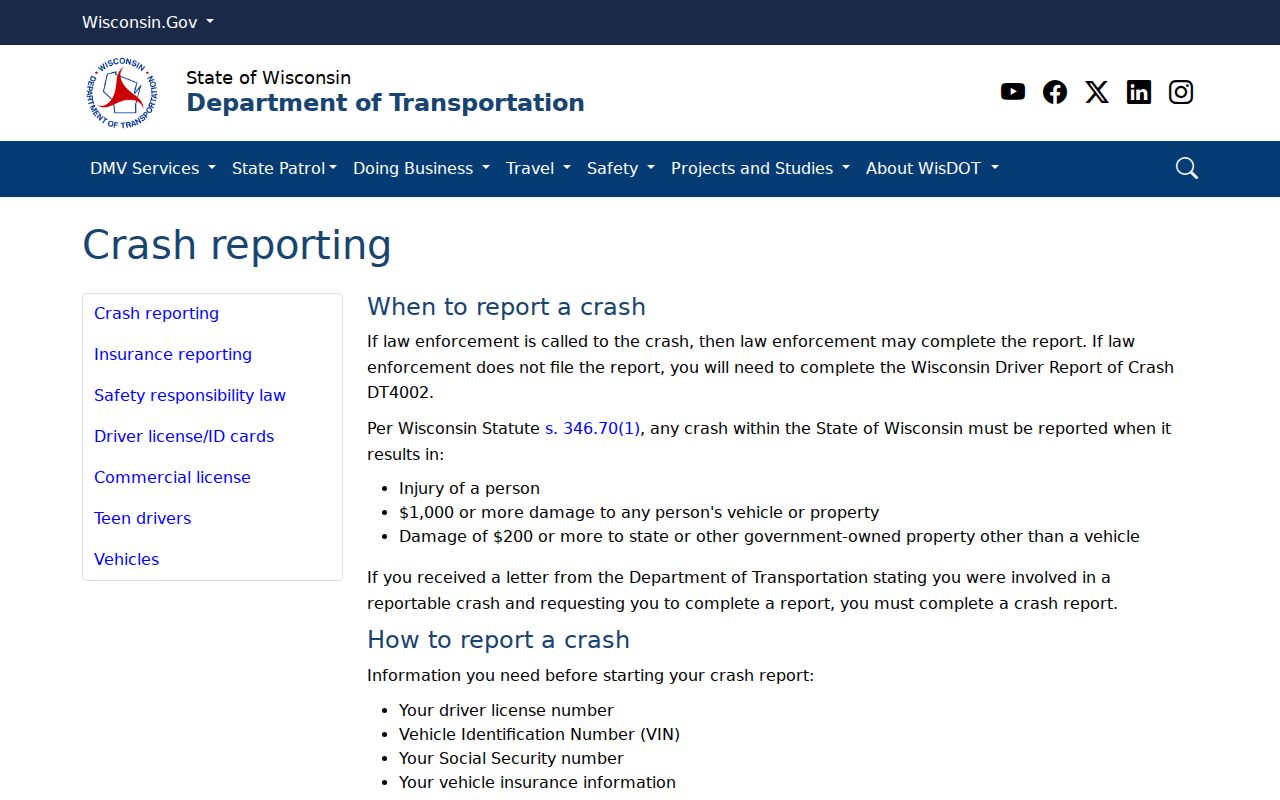
That portal does not search offense reports, arrest records, 911 audio, or body-camera footage.
Public Access Laws
The Wisconsin Public Records Law, principally Wis. Stat. §§ 19.31 through 19.39, begins with a strong policy of access to existing government records. Access still depends on the specific record. Statutes, court rules, confidentiality provisions, and a record-specific public-interest balancing test can support withholding or redaction. A request should identify the subject, date range, agency, and record type well enough for the custodian to locate existing material.
The official Wisconsin Public Records Law text supplies the governing statutory language.
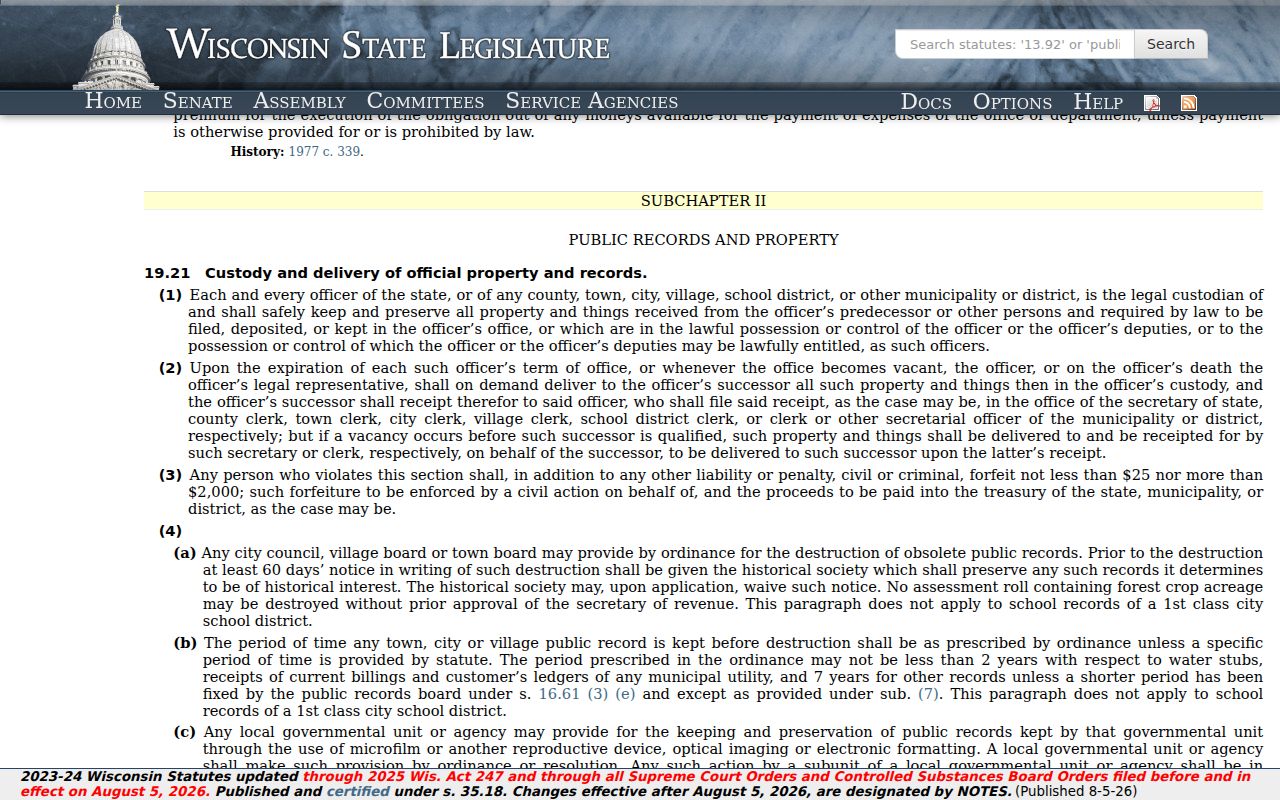
Repository access, court privacy, and expungement also rely on separate Wisconsin statutes.
Key Wisconsin statutes:
Wis. Stat. § 19.35 sets the general access and authorized-fee framework for existing public records.
Wis. Stat. § 165.83 defines DOJ criminal-identification duties and repository content.
Wis. Stat. § 165.84 governs reporting duties and a limited arrest-fingerprint removal route.
Wis. Stat. § 973.015 provides Wisconsin's narrow court-record expungement remedy.
Wisconsin Expungement Record Limits
Wisconsin expungement is narrow. Under Wis. Stat. § 973.015, the sentencing court must determine eligibility at sentencing, and the person must successfully complete the sentence. Headline criteria often include being under age 25 when the offense occurred and an offense with a maximum imprisonment term of six years or less, but exclusions and the actual sentencing order control. It is not a general later petition for every old conviction.
The filing belongs in the circuit court of conviction. Form CR-266 applies only to its stated non-probation, non-incarceration route. The form itself warns that expungement affects the court record, not police, prosecutor, CIB, or other law-enforcement files, and it does not vacate the conviction. A person should check both WCCA and their own CIB response after the court acts.
Wisconsin's executive pardon is different. A pardon adds an executive action to the public record but does not seal it. A CIB accuracy challenge is different again. It corrects a false match, missing disposition, wrong charge, or another repository error. These remedies should not be blended into one promise to erase criminal history.
Wisconsin Supervision Record Terms
Wisconsin DOC's Division of Community Corrections administers probation, parole, and extended supervision statewide. The terms are not synonyms. Circuit courts order probation. A modern bifurcated prison sentence usually pairs confinement with extended supervision. Discretionary parole mainly concerns eligible offenses committed before December 31, 1999 and involves the Wisconsin Parole Commission.
The DOC Offender Locator can confirm qualifying public custody or supervision status, but it does not disclose the whole agent file or every condition. WCCA and the sentencing county clerk provide the judgment and docket. A revocation is an administrative action, not automatically a new conviction, though a new alleged crime can create a separate circuit-court case.
Wisconsin also grades felonies from Class A through I and misdemeanors from Class A through C. Those classes set maximum penalties, not a prediction of sentence. The offense date, statute version, modifiers, plea changes, sentence structure, and credit all matter. Read the filed charge and final judgment separately.
Wisconsin Federal and Police Records
Federal criminal cases sit outside WCCA. Wisconsin is divided between the Eastern and Western federal judicial districts, and their cases use PACER. Federal custody uses the Bureau of Prisons locator. A person reviewing their own FBI identity history follows the fingerprint-supported FBI Identity History Summary process. That product is not a public name search of another adult.
The PACER gateway is the official federal docket route.
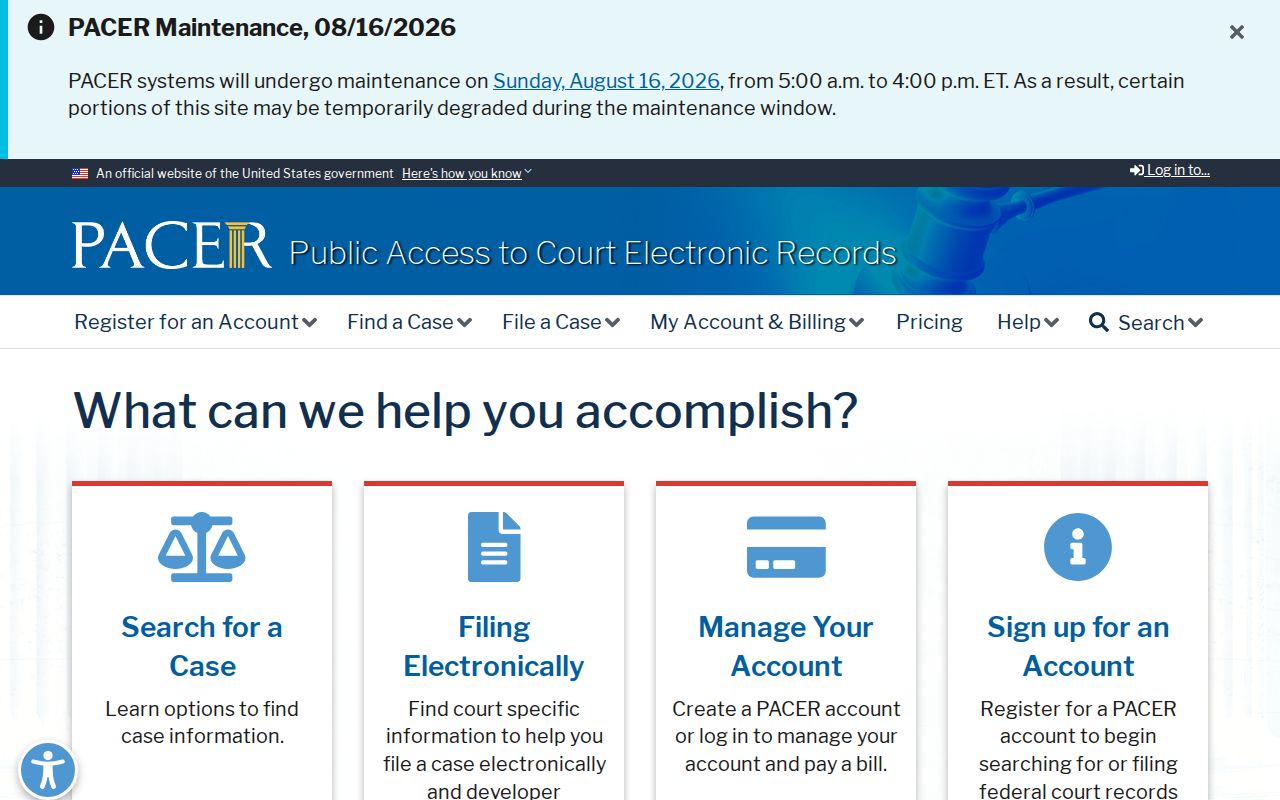
PACER records do not replace a Wisconsin county booking, local incident report, or state circuit-court file.
Police reports also remain distributed. Ask a city department for its incident file, a sheriff for its report or jail record, and State Patrol for the records it created. Wisconsin Public Records Law can be the fallback when no packaged portal exists. Medical, juvenile, victim, witness, investigative, safety, and protected identifier material may be redacted or withheld under the applicable rule and balancing test.
Find Criminal Records by County in Wisconsin
Arrests, jail bookings, incident reports, prosecution files, and official circuit-court documents are created at the local level. Wisconsin's largest metro counties have especially active record systems, but the custody rule is the same statewide: use the county where the arrest, filing, or detention occurred. Each of Wisconsin's 72 county sites routes to the local sheriff, jail, clerk, and court sources without treating a statewide portal as the full file.
The official Wisconsin county roster confirms the county names used in the directory.
Each featured county link uses the live subdomain and leads to county-specific criminal record sources.
Milwaukee County
Milwaukee · Wisconsin's largest urban sheriff, jail, and circuit-court record environment
Dane County
Madison · Large circuit docket and the seat of state government
Waukesha County
Waukesha · Major southeastern metro court and jail system
Brown County
Green Bay · Northeastern Wisconsin's largest metro records hub
Racine County
Racine · Separate sheriff, jail, and busy circuit-court sources
Outagamie County
Appleton · A key Fox Cities sheriff and court route
Winnebago County
Oshkosh · Fox Valley clerk and sheriff systems
Kenosha County
Kenosha · Southeastern border county arrest and court records
Browse the full directory of all 72 Wisconsin counties to open the criminal records site for any county.
Why Wisconsin Criminal Records Disagree
WCCA, CIB, county booking files, and DOC records organize information around different events. WCCA centers on a filed case. CIB centers on a fingerprint-supported arrest cycle and identity. A jail roster centers on present or recent custody. DOC centers on state incarceration or supervision. The same event can appear under different dates, charge labels, identifiers, and status terms.
Coverage rules create more gaps. WCCA excludes confidential, juvenile, sealed, expunged, and otherwise nonpublic material. Older coverage varies. A qualifying arrest without fingerprints will not enter CCH. A disposition can be delayed or fail to link. A municipal forfeiture case may sit outside the circuit criminal search. Federal, tribal, and out-of-state records use other systems.
Fees also reflect product scope. A WORCS General search costs $7. A certified result or mailed General request costs $12, and a Wisconsin Police Certificate costs $20. WCCA, the DOC locator, and the public sex offender registry are free. County copies, certification, archived retrieval, police video, and local jail records vary by custodian. Paying more does not turn a Wisconsin-only product into a national record.
Note: When two sources conflict, obtain the judgment or agency record from the custodian and challenge only the system that contains the error.